It’s official! The jury is in, and the winners are…
Join us to celebrate bold, award-winning student vision that reimagine the Ottawa River Waterway as a vibrant public gathering space. The NCC would like to thank all those who participated in the 2026 challenge.
The Design Challenge is an annual ideas competition for students from across Canada. In this challenge, participants are invited to come up with innovative planning and design ideas for a selected area in the National Capital Region.
Waterway Design Challenge
Water has long shaped the landscape, culture and history of the National Capital Region. The Rideau Canal and Ottawa River are more than scenic features—they are active corridors that connect communities, support recreation and enrich the urban fabric. Through the NCC Waterway Design Challenge, we invite student designers, artists and visionaries to explore the powerful relationship between water, culture and place. This initiative seeks imaginative, water-based installations that engage the public and celebrate the Ottawa River’s cultural significance. Whether highlighting history, encouraging social interaction or promoting sustainability, proposals should foster meaningful connections between people, the public space and the river.
We welcome bold ideas that respond to the landscape, honour tradition while embracing innovation, and offer fresh ways to experience our vital waterways. This is a chance to shape the identity of the Capital through design, storytelling and a connection to water.
Context
The NCC is the long-term steward of federal lands in the region, shaping the urban landscape on both sides of the Ottawa River. Following the completion of the National Capital Core Area Plan, the NCC is renewing its commitment to reconnecting people with the region’s waterways and deepening public engagement with these defining natural features.
The Ottawa River, rich in history and cultural meaning, offers a unique opportunity to blend heritage, recreation and innovative public space design. This challenge invites students to envision installations that reflect the evolving relationship between community and place, while celebrating the enduring role of water in shaping the Capital’s identity.
Study Site: Ottawa River Shoreline in Gatineau
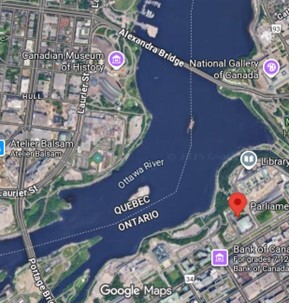
The shoreline of the Ottawa River in Gatineau, between the Alexandra Bridge and the Portage Bridge, was part of an ancient portage route along the north shore of the Kichi Zibi, a place of meeting and exchange for Indigenous Peoples for thousands of years. The shorelines were industrialized with factories and timber operations during the 19th and early 20th centuries. In the latter half of the 20th century, the federal government created parkland along the shorelines and the Place du Portage complex to house federal government departments. It includes key landmarks such as the Canadian Museum of History, the Kruger factory, Place du Portage and Scott Point.
The Voyageurs Pathway currently runs along the shoreline, connecting the Zibi development in the southwest to Jacques-Cartier Park in the northeast. It provides direct access for pedestrians and cyclists and connects them to surrounding cultural and urban destinations. The intentions for this sector of the core area are to:
- Strengthen connections between downtown Gatineau and the waterfront in ways that encourage movement, access and exploration.
- Transform the sector into a dynamic waterfront destination that integrates national institutions, public programs, workplaces and open spaces.
- Recognize the long Indigenous presence in the region through the integration of Indigenous history in the design of public spaces.
- Preserve and enhance iconic views of Parliament Hill along the shoreline.
- Maintain a dynamic shoreline with a mix of buildings, performance spaces and open areas, ensuring fluidity and diversity of uses.
The Challenge
How can water-based installations along the Ottawa River foster deeper connections between people, culture and the National Capital? This challenge invites innovative proposals that celebrate the waterways as dynamic public spaces, strengthening connection through design, storytelling, environmental considerations and commercial offerings.
Proposals should:
- Create installations and complementary structures that encourage public interaction with the water, whether through immersive experiences, gathering spaces or artistic expression, the anticipated cost of which should be consistent with an experimental pilot project, rather than a permanent development.
- Thoughtfully highlight historical narratives, weaving in themes that reflect the region’s past while embracing contemporary perspectives.
- Promote social engagement, offering opportunities for connection, reflection and shared experiences.
- Celebrate environmental sustainability, integrating water-sensitive design that respects and enhances the natural environment.
- Offer a bold, creative approach that responds to the landscape while bridging tradition with forward-thinking ideas.
- Establish new ways to experience and appreciate the waterways, reinforcing their role as defining elements of the National Capital Region.
- Consider strategies for year-round usability and how design elements, such as materials, lighting and programming, can support the user experience.
- Consider the nighttime experience, designing installations that make the waterfront inviting after dark, whether through thoughtful lighting, interactive elements or programming that encourages people to gather and engage with the space at night.
- Complementary commercial opportunities are not required but may be considered in the evaluation.
The NCC welcomes proposals that reimagine these spaces, using design as a tool to inspire, provoke discussion and bring people closer to the water.
Comprehensive evaluation criteria will be utilized as a part of the process to ensure a structured assessment of submissions. This framework will outline key considerations, guiding the jury in their review process to uphold the objectives and vision of the challenge. The Waterfront Concept of the National Capital Core Area Plan will serve as a key reference, ensuring alignment with broader planning principles and strategic priorities for the Capital’s waterways.
Regarding the level of detail: We want conceptual drawings, not construction drawings, for architectural elements. You may provide information in the plan, elevations, sections and pedestrian eye-level views. See the most frequently asked questions under the FAQs section.
Awards
The winning project team will receive a first-place award of $3,000 and a trip to Ottawa. The second-place team will receive an award of $2,000. The jury may determine honourable mention awards as well. There are no monetary prizes associated with these awards.
Registration
There is no registration fee to participate in the NCC Design Challenge. However, participants are required to register to receive a team number that ensures anonymity of the submissions throughout the evaluation process. One registration is required per project submitted. Participants may register below.
By registering, participants agree to all competition terms and conditions.
The competition is open to students who are currently enrolled at a post-secondary educational institution in Canada. The maximum number of participants per team is four. The NCC encourages students to form interdisciplinary teams. Proposals should consider aspects of urban planning and design, architecture, landscape architecture and design, and transportation planning. A diverse team of complementary skills is likely to result in a more successful submission.
Competition Details
Submissions may be prepared in either of Canada’s two official languages (English or French). Competition submissions are due no later than 11:59 pm Eastern Daylight Time on Monday, March 23, 2026. All submissions will be made via the NCC’s SharePoint site. Further details will be provided to participants after registration. No hard copies of materials will be accepted.
The NCC Design Challenge is an anonymous competition. No names or identifying symbols of participants shall appear on submitted material or in filenames.
The competition is open to students from all disciplines. However, it may be especially relevant to those studying urban planning, architecture, fine arts, or engineering. Teams may include up to four participants, and the NCC strongly encourages the formation of interdisciplinary groups. A team that brings together a diverse range of skills and perspectives is more likely to develop a compelling and well-rounded submission.
Key Dates:
Launch of competition |
December 4, 2025 |
Registration closes |
January 23, 2026 |
Information session |
February 5, 2026 |
Deadline for submission |
March 23, 2026 |
Technical review of submissions |
March 23–April 2, 2026 |
Winners Announcement |
April 29, 2026 |
Questions
Questions about the competition will be accepted until Monday, February 2, 2026. Questions should be emailed to challenge-defi@ncc-ccn.ca. All emails sent should include “Student Competition” in the subject line. Answers to all questions will be posted below.
Frequently Asked Questions
| Question | Answer |
| Can something be built on the water, or should proposals be limited to the riverbanks? | Proposals may include floating elements and structures that extend over the water, provided they remain oriented toward the shoreline. |
| Are teams expected to consult Indigenous communities as part of this challenge? | As this is an ideas competition, we recommend that you use only secondary sources for your proposal. |
| How much of the existing instructional zoning (GIS layers) must be incorporated? | You are encouraged to review and consider existing planning contexts, but you are free to propose ideas that address the challenge criteria. |
| Can Gull Island be used as part of the proposal? | We recommend that proposals remain focused on the study area and shoreline. |
| Can the parking area behind the Kruger Products plant be used? Are commercial kiosks, pop‑up shops or food trucks allowed? Can on‑site parking be removed in the design? | You are free to propose ideas that respond to the criteria of the challenge. |
| For the submission panels, is there a preferred orientation (landscape or portrait)? Should the site plan follow true north? | There is no required orientation, but we recommend that you consider the site orientation in the layout of your submission. |
| What is expected in the video submission? | The video should provide a summary of your project, and it may be used to promote the winning team’s design. |
| Should the proposed structures be designed for all seasons? | We recommend that you consider all seasons in the submission of your proposal. |
| Should the site’s pulp‑and‑paper history be incorporated into the design? | You are encouraged to consider the cultural history and context as part of your proposal development. |
| How far into the future should water levels be projected? | Consider water levels projected over the next 20 years and beyond. |
| Should the Aqua Taxi be incorporated into the design? | Water mobility options may be incorporated into the design. |
| How detailed should the submission be regarding material choices, for example, dock materials or construction materials? | Designs can be conceptual in their presentation. Material options are not required. |
Submission Requirements
- Up to two 60.96-cm x 91.44-cm (24-in. x 36-in.) boards in PDF format. The filenames should include the registration number (e.g. “Board_12345”). All drawings and architectural scales should be expressed in metric units.
- A written statement not exceeding 500 words explaining the ideas. The file should be in .txt or Word format. The filename should include the registration number (e.g. “Written_12345”).
- A video (maximum of three minutes) that visually supports the design proposal. This can include a vlog, animations, renderings or narrated walkthroughs to communicate the concept, mood and key ideas. Submit as an MP4 file titled with the team’s registration number (e.g. “Video_12345”).
- A separate document with contact information for the participating individual/team. The document should include the project title, participant name(s) and email address for primary contact. The filename should include the registration number (e.g. “ID_12345”). The sources of any third-party material incorporated in the entry must also be included.
Resources and References
- Waterway Design Challenge 2026 Brief
- Design Contest Rules and Regulations
- National Capital Commission. The Plan for Canada’s Capital, 2017–2067
- National Capital Core Area Plan
- Capital Design Guidelines
- Capital Illumination Plan, 2017-2027
- National Capital Commission, Canada’s Capital Views Protection, 2007
- Policy on Planning Practice and Reconciliation
Ownership and copyright
Each participant shall retain ownership of the copyright associated with the entries submitted.
By submitting an entry, each participant grants the NCC a non-exclusive perpetual licence to use, reproduce, publish, modify, incorporate into other work, distribute and promote, in whole or in part, the materials submitted by the participant for any non-commercial or commercial purpose, in any format whatsoever, including print, digital publication, audio, video, and all other media (whether now known or later developed), in any form, without territorial limits and without attribution.
There is no registration fee to participate in the Urban Design Challenge. However, participants are required to register to receive a team number that ensures anonymity of the submissions throughout the evaluation process. One registration is required per project submitted.
Registrations are now closed.
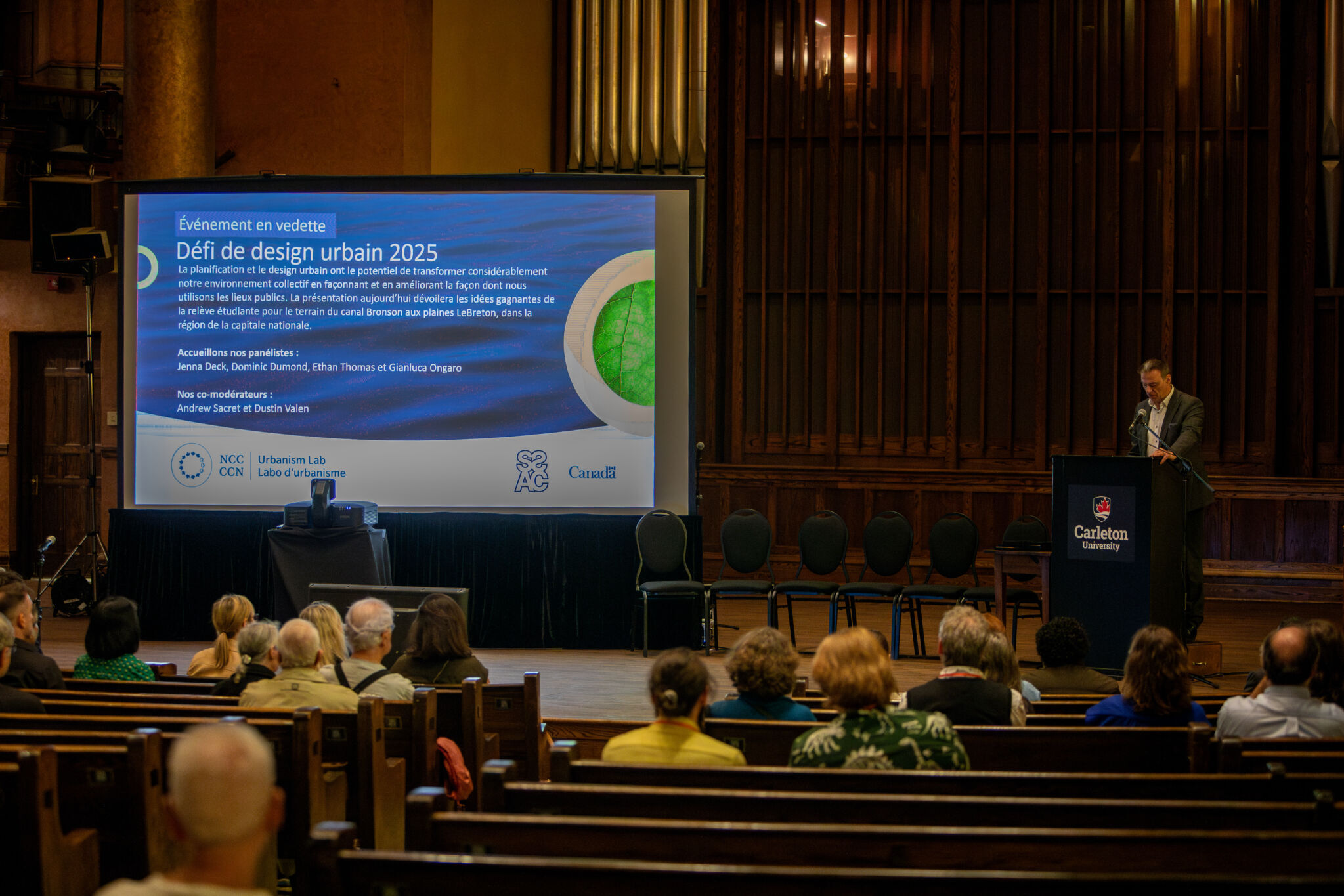
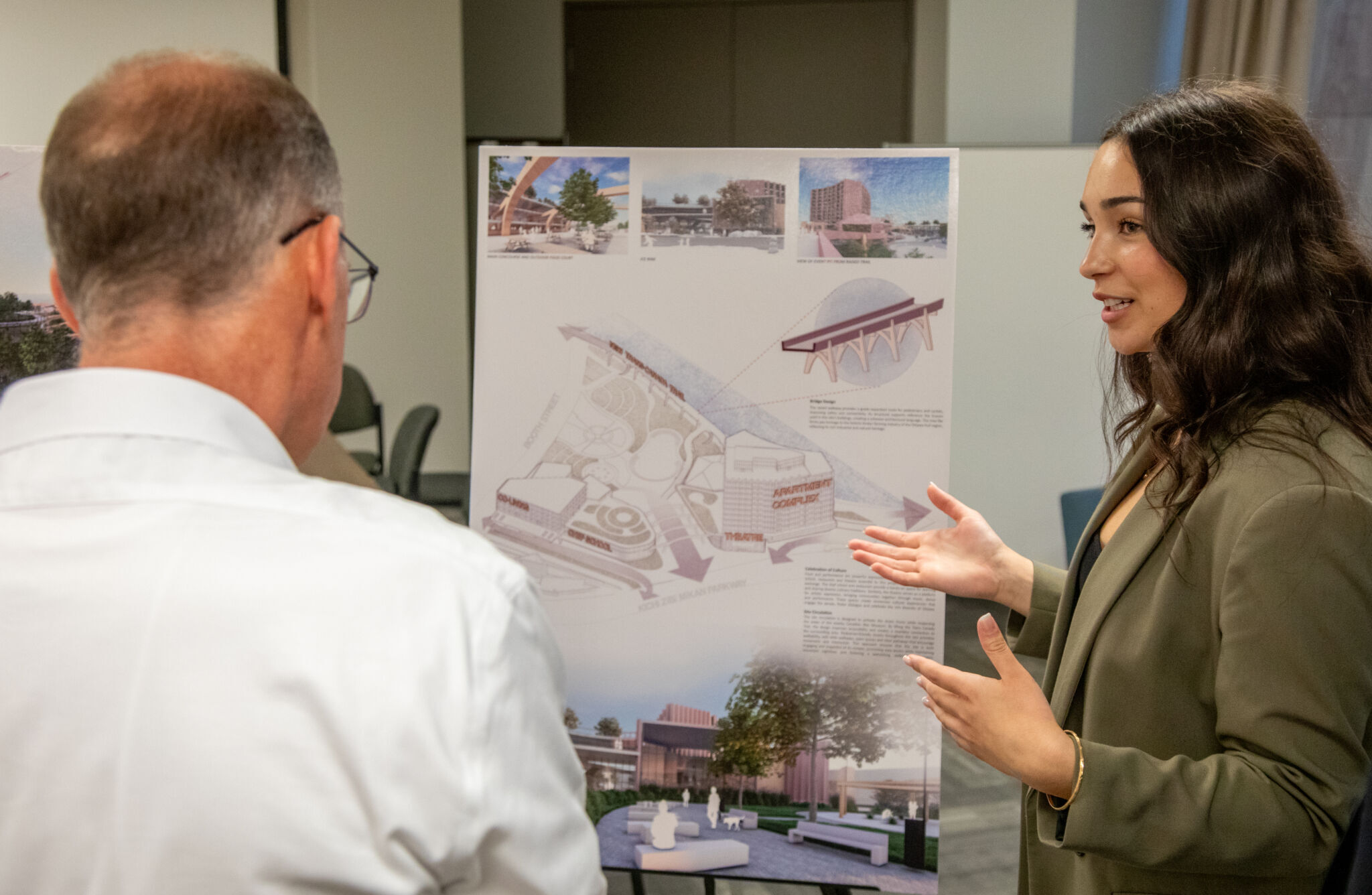
Past editions
Stay informed
To receive updates about this Urbanism Lab event or future events, please subscribe to our newsletter.