Gatineau Park’s day shelters are rustic, cottage-type structures that provide rest areas for Park users along the trail network. They are equipped with basic amenities so that visitors can take a break and warm up: wood stoves and items for starting a fire (winter only), picnic tables, clothing and equipment racks, and outhouses.
They are also equipped with a trail map and nature interpretation panels. All the shelters have an emergency communication system, except for the Shilly Shally, Sugarbush and Philippe Lake shelters.
Gatineau Park day shelters are open daily from 7 am to 11 pm.
Important
- Pets are not permitted in the day shelters, or on ski, snow bike and snowshoe trails.
- Dispose of your trash and recyclable material in the receptacles provided for this purpose, or take your trash back home with you, where you can dispose of it properly.
- It is prohibited to possess or consume alcohol.
- Overnight stays are not permitted at day shelters.
Day shelters
Sugarbush Shelter
❄️/☀️ Accessible on foot, by bike and by car year-round
The Sugarbush Shelter is located a few metres from the Visitor Centre in Old Chelsea. It is open from 9 am to 4 pm and does not have an emergency communication system. It is equipped with a waxing table for cross-country skis.
Keogan Shelter
❄️ Accessible on skis only in winter.
☀️ Accessible on foot, by bike and by car in summer.
The Keogan Shelter is located on Trail 1, near the Fortune Lake Parkway.
It was built in 1923 by the Cliffside Ski Club, to provide overnight shelter for club members.
Shilly Shally Shelter
❄️ Accessible on skis only in winter.
☀️ Accessible on foot and by bike in summer.
The Shilly Shally Shelter is located on Trail 1, near the Fortune Lake Parkway. It is the smallest shelter in the Park. It does not have an emergency communication system.
The Shilly Shally Shelter was formerly the summer residence of photographer Rosemary Gilliat Eaton.
Huron Shelter
❄️ Accessible on skis only in winter.
☀️ Accessible on foot and by bike in summer.
The Huron Shelter is located on Trail 1, near the Huron and Étienne Brûlé lookouts.
Western Shelter
❄️ Accessible on skis only in winter.
☀️ Accessible on foot and by bike in summer.
The Western Shelter is located on Trail 2, near Champlain Lookout.
McKinstry Shelter
❄️ Accessible on skis only in winter.
☀️ Accessible on foot and by bike in summer.
The McKinstry Shelter is located on Trail 1.
Healey Shelter
❄️ Accessible on skis, snowshoes and by fat bike in winter.
☀️ Accessible on foot and by bike in summer.
The Healey Shelter is accessible via trails 50 (on skis) and 72-71-70 (on snowshoes and by fat bike).
Between 1820 and 1880, British, American and French-Canadian pioneers began to settle in the Gatineau Hills. Among them were Irish immigrants Edward and Bridget Healey, who established this 81-hectare (200-acre) homestead around 1863.
Herridge Shelter
❄️ Accessible on skis, snowshoes and by fat bike in winter.
☀️ Accessible on foot and by bike in summer.
The Herridge Shelter is accessible via trails 50 (on skis) and 72-71-70 (on snowshoes and by fat bike).
Its name comes from its last occupant, William Duncan Herridge, an Ottawa lawyer and son-in-law to Prime Minister R.B. Bennett.
Brown Lake Shelter
❄️ Accessible on skis, snowshoes and by fat bike in winter.
☀️ Accessible on foot and by bike in summer.
The Brown Lake Shelter is accessible via trails 57 (on skis) and 72 (on snowshoes and by fat bike). It is located near the historic village of Wakefield. This former cabin was recently converted to a day shelter and is powered by solar energy.
Renaud Shelter
❄️ Accessible on skis and snowshoes in winter.
☀️ Accessible on foot and by bike in summer.
The Renaud Shelter is accessible via trails 55 (on skis) and 74 (on snowshoes). Having undergone a complete makeover in 2014, the shelter now boasts a much more modern architecture than that of the other Park shelters.
It is named after the Renaud family who settled in the Philippe Lake area in the late 19th century.
Lusk Lake Shelter
❄️ Accessible on skis only in winter.
☀️ Accessible on foot only in summer.
The Lusk Lake Shelter is located on Trail 54.
The shelter is named after Joseph Lusk, an Irish pioneer who came to Canada in 1820 and became a prosperous farmer in the region.
Philippe Lake Shelter
❄️ Accessible on skis and snowshoes in winter.
☀️ Accessible on foot only in summer.
The Philippe Shelter is located between Trail 50 and Trail 73.
The Philippe Lake Shelter is accessible via Trail 50 (on skis) and Trail 73 (on snowshoes). As part of the Philippe Lake campground rehabilitation project, the former concession stand at Parent Beach has been reimagined as a day shelter. There is a dry toilet at the Philippe Lake Shelter.
Built in 1958 from locally sourced materials, the original structure served as a concession stand for beachgoers and campers, with a pavilion to provide protection from the elements. The building may have changed over the years, but the original stone walls still stand as a quiet reminder of decades of fun at Philippe Lake. Today, the shelter is the perfect spot to take a break, warm up, and enjoy the view—just like visitors have been doing since the very beginning.
Outdoor rest areas
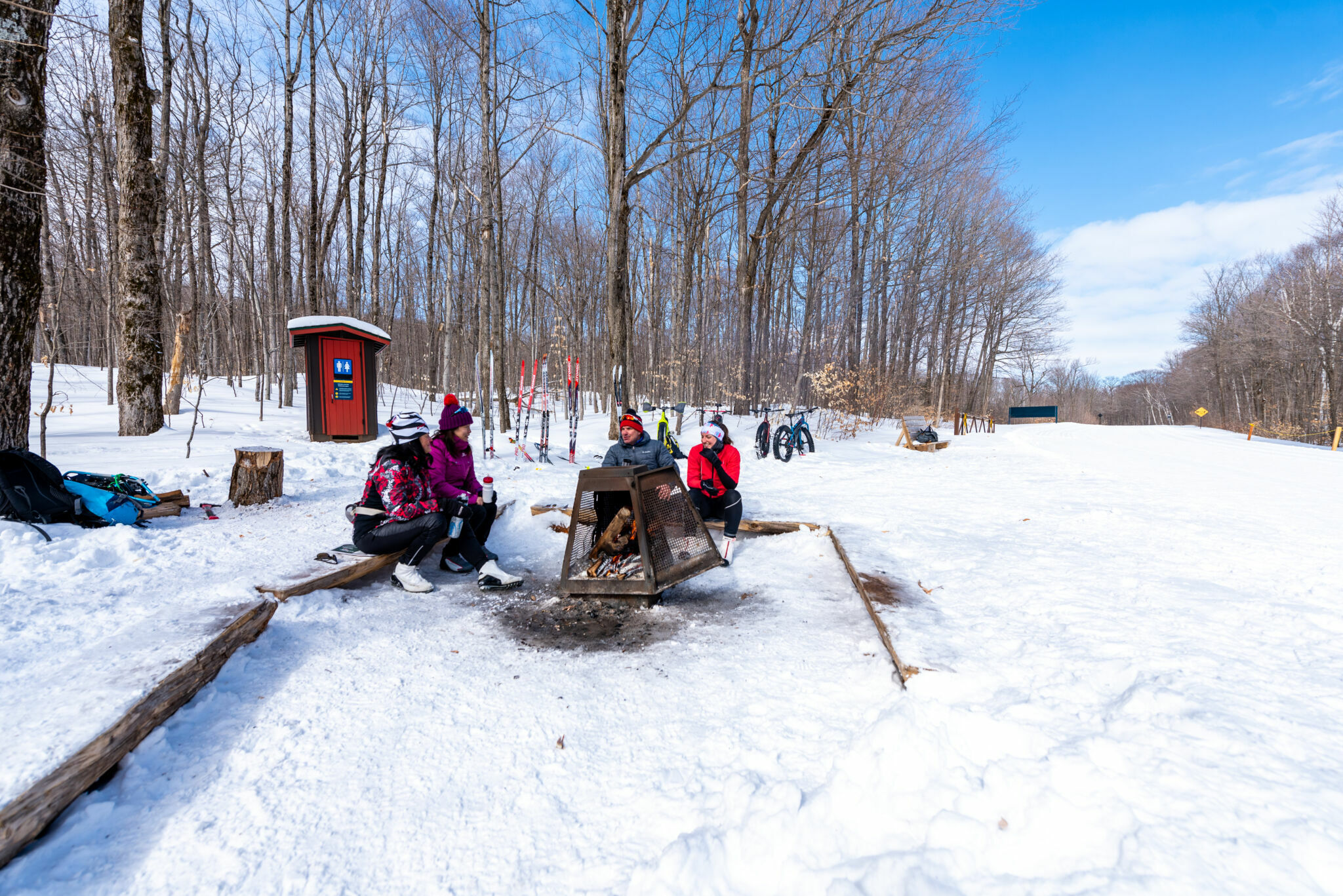
In winter, there are four outdoor rest areas with fire pits and benches where users can stop for a rest and take a break.
Philippe Lake sector: For snowshoers and snow bikers
- Trail 71
- Trail 73 (two locations)
Parkway sector: For skiers, snowshoers and bikers
- Mica (intersection of the Gatineau and Champlain parkways)
Useful information
For the best experience, bring the following with you:
- Lunch, snacks, drinks
- Matches to start a fire in the wood stove, if necessary
- Please note that the stove may not achieve a high enough temperature to be able to cook or reheat meals.
- Candles or flashlight; shelters are not equipped with lighting or electricity
- A bag for packing out your garbage