The National Capital Greenbelt Master Plan describes the purpose of the Greenbelt and its role at a national and regional level. It also sets out the values that guide decisions regarding conservation, agriculture, recreation and infrastructure.
The current version was approved in November 2013. In line with its planning cycle, which involves adapting to new and emerging issues, the National Capital Commission (NCC) will begin a review of the plan this year.
What is the National Capital Greenbelt?
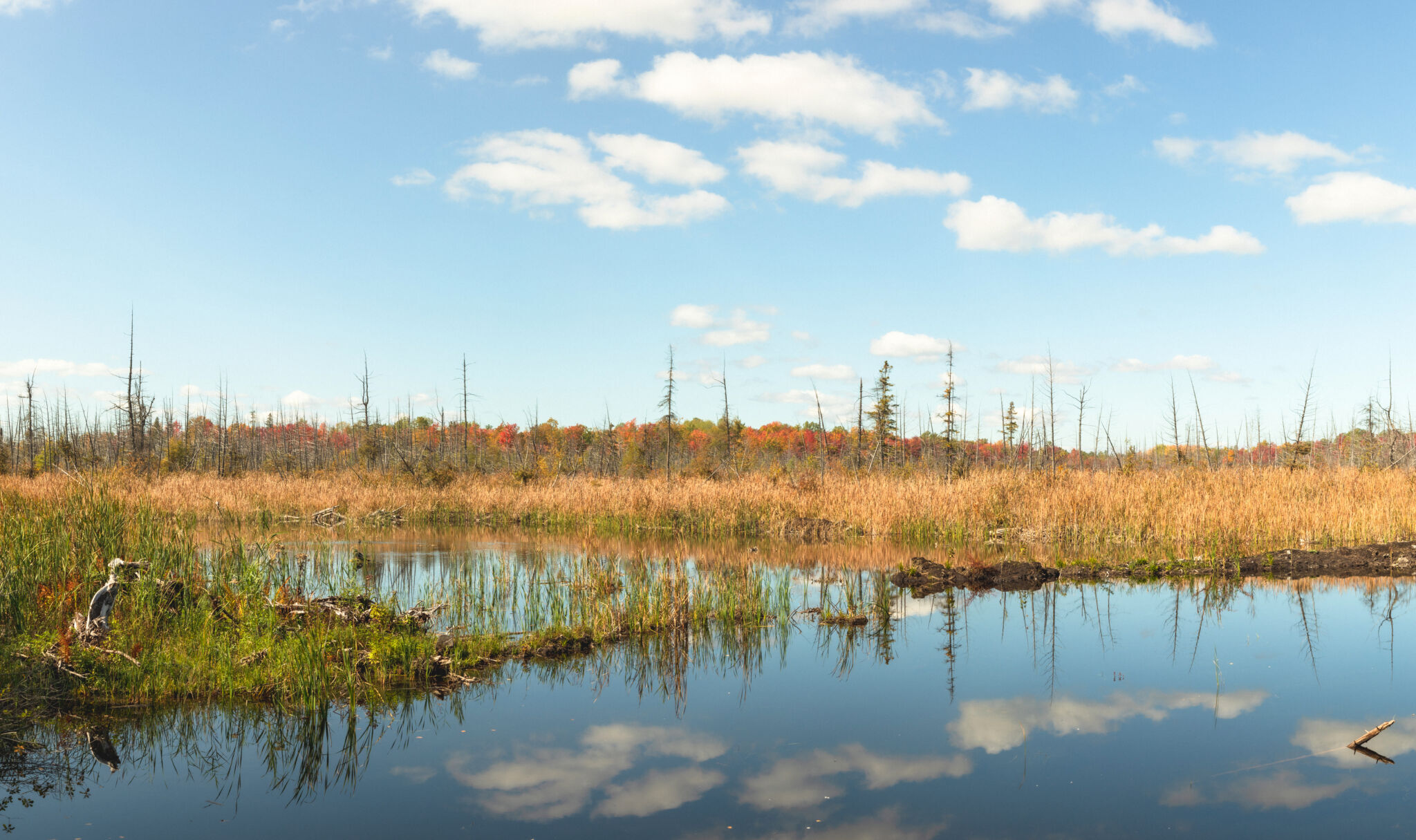
The National Capital Greenbelt is the most ecologically diverse area in Eastern Ontario. It comprises 20,000 hectares of green space, including farms, forests and wetlands. It was created in the 1950s to protect the rural land bordering the Capital from urban sprawl. It has since become the largest publicly owned greenbelt in the world.
The Greenbelt protects natural areas like forests, wetlands, streams and sand dunes that sustain biodiversity. The natural areas in the Greenbelt support human and ecological health in the National Capital Region.
The NCC owns approximately 75% of the Greenbelt lands, with most of the remainder owned by other federal agencies.
Review of the 2013 Master Plan
Since the Greenbelt and its surrounding neighbourhoods have evolved over time, its Master Plan needs to be continuously reviewed to ensure it remains effective and relevant.
While the uses of the Greenbelt are varied, the 2013 Master Plan identifies the Greenbelt’s roles in four key areas of focus:
- Natural environment
- Protect and showcase the natural areas, ecosystems and habitats that form an integral part of the broader natural environment of the National Capital Region
- Respond to Canadians’ aspirations for a healthy and resilient environment
- Sustainable agriculture
- Provide opportunities for sustainable agriculture that benefits current and future generations in the National Capital Region
- Capital experiences and recreation
- Offer a rich and varied array of outdoor activities and Capital experiences that respect and foster the other roles of the Greenbelt
- Facilities
- Support existing federal and community facilities and limit the development of new facilities in current built areas to minimize encroachment on the Greenbelt
Engagement
The NCC has begun reviewing and updating its Greenbelt Master Plan. Public participation—a key element in the development of all NCC master plans—will be ongoing throughout the process. Sign up for our newsletter to receive updates on the various stages of the consultations.
Your input is essential in guiding the development of the new Master Plan.
Process and timeline
Fall and winter 2025–2026
- Start of the Greenbelt Master Plan review
- Meeting with technical stakeholders and start of study work
Spring and summer 2026
- Meeting with technical stakeholders
- Organizing the public advisory group (PAG)
- Public consultation (online and in person) on the vision and guiding principles
Fall and winter 2026–2027
- Presentation of the draft vision and guiding principles to the NCC Board of Directors
- Development of specific policies and sector plans
Spring 2027
- Meeting of the public advisory group
- Public consultation (online and in person) on policies and sector plans
Fall 2027
- Meeting of the public advisory group
- Public consultation (online) on the 90%-complete draft master plan
- Finalization of the Greenbelt Master Plan
Winter 2028
- Presentation of the new Greenbelt Master Plan to the NCC Board of Directors for approval
Documents
- Canada's Capital Greenbelt Master Plan (2013) (62.56 MiB)